
Car Leasing in Indiana (2026): Payment-by-Payment Lease Tax, Excise Tax & $0 Down Deals
Vehicle Leasing and Financing Simplified
Drive away with your dream car
Leasing a Car in Indiana: What Makes It Different
Leasing in Indiana isn't just buying with smaller payments. The Hoosier State taxes leases on a different schedule than purchases, charges a separate annual excise tax that most states don't have, and gives lessees specific legal protections that many drivers never learn about until something goes wrong. This guide walks through exactly how a lease is taxed, what you'll actually pay at signing and at renewal, what the law requires if your leased vehicle turns out to be defective, and which incentive programs are genuinely available to Indiana drivers in 2026, not the ones that already expired.
Auto Bandit pulls together current lease and finance offers from dealers across Indianapolis, Fort Wayne, Evansville, South Bend, and every county in between. Before you sign anything, though, it's worth understanding the state-specific rules below, since they can change your total cost by hundreds of dollars depending on how your deal is structured.
How Indiana Taxes a Car Lease (It's Not the Same as Buying)
This is the part most lease shoppers get wrong, because it genuinely works differently than a cash purchase.
Purchases are taxed once, up front. If you buy a car in Indiana, the state's 7% sales tax is calculated on the full purchase price, minus any trade-in credit, and collected in one lump sum at the time of sale.
Leases are taxed payment by payment. The Indiana Department of Revenue's Sales Tax Information Bulletin #28L spells out that each individual lease payment counts as its own separate taxable transaction, not one lump sum. In practice, that means Indiana sales tax is collected on your down payment, any capital cost reduction, and your first month's payment at signing, and then again every month after that, built into each lease payment for the life of the lease. There's generally no way to prepay the full lease tax up front the way you can with a cash purchase, unless your lease is structured as a single lump-sum payment at inception, which is uncommon for consumer vehicle leases.
Manufacturer rebates are taxed differently on a lease than on a purchase. On a standard purchase, incentives and rebates don't reduce your taxable price under Indiana law; you're taxed as if you paid full price. On a lease it goes a step further. A manufacturer's rebate applied to your lease is treated as taxable income to the leasing company, so tax applies to that rebate amount too, whether you take it as cash or apply it toward your down payment. A manufacturer's price reduction (an actual drop in the vehicle's selling price) and a dealer discount, by contrast, are not taxed, because the lessor never receives that money as income.
Trade-ins only reduce your tax if the trade-in is a like-kind vehicle titled in your name. If you trade in a car you own toward a new lease, the equity in that trade reduces your taxable amount. But if you trade in something that isn't a vehicle-for-vehicle exchange, such as a boat, a motorcycle for a car, or a vehicle still titled to a leasing company from a prior lease you haven't bought out, none of that trade value is tax-exempt. It simply gets added to your taxable total.
A simplified example based on the Department of Revenue's own published guidance shows how this plays out: trade in a vehicle worth $15,000 with a $10,000 loan balance (leaving $5,000 in tax-exempt equity), pay $8,000 cash, and make a first month's payment of $400, and you'd owe Indiana sales tax on $8,400 at signing, not on the full $13,400 the lessor actually receives. Get this wrong when negotiating, or let a dealer misapply it, and you can end up overpaying tax at signing.
If you're leasing from an Indiana dealer but registering out of state, the rules flip. For leases with recurring monthly payments, Indiana's sourcing rules generally apply the sales tax of the state where the vehicle will actually be registered and primarily kept, not necessarily Indiana, and not necessarily your state of residence if it differs from where the car is garaged. That's the opposite of how a straight purchase works here, where the special nonresident delivery rate rules don't apply the same way to periodic leases. If you're a nonresident leasing in Indiana, or an Indiana resident leasing a car you'll register elsewhere, confirm in writing which state's tax the dealer is actually collecting before you sign.
The advertised "flat 7%, no county sales tax" is accurate as a statement about the rate. On a lease, though, that rate gets applied differently, more often, and to a different taxable base than it does on a purchase. Ask your dealer for the itemized breakdown of what's taxed at signing versus what's built into your monthly payment.
Top Indiana Car Lease Specials (Updated October 2026)



Registration, Excise Tax and EV/Hybrid Fees for a Leased Vehicle
Even though you don't own a leased vehicle outright, it still has to be registered, and that comes with its own annual costs separate from your lease payment and separate from sales tax.
Indiana charges an annual excise tax on every registered vehicle, based on the vehicle's original MSRP and its model-year age. Newer, more expensive vehicles pay more, and the tax steps down each year as the car ages. This is billed every year at renewal on top of your lease payment, and it doesn't go away just because you're leasing instead of owning. The Indiana Bureau of Motor Vehicles publishes the full excise tax schedule showing where a specific vehicle falls, since the exact dollar amount depends on which of the 17 MSRP brackets it lands in.
For a typical passenger vehicle, standard fees run $21.35 for annual registration, plus a $15 Transportation Infrastructure Improvement Fee charged on every registration, plus a one-time $15 title fee when the lease is originated.
About two-thirds of Indiana's 92 counties add a local wheel tax or excise surtax on top of those state fees. Most charge a flat annual amount, typically in the $25 to $50 range, though a handful, Steuben County being the highest example, charge a percentage of your excise tax instead of a flat fee. This is set locally, so it depends on where you register, not where you bought the car.
If you're leasing an electric or hybrid vehicle, budget for an additional annual fee that doesn't apply to gas vehicles. For calendar year 2026, that supplemental fee is $242 for fully electric vehicles and $81 for hybrids and plug-in hybrids, collected at registration and every renewal. This fee is adjusted annually by the state (the statutory base is $150 and $50, with yearly increases tied to the fuel tax index), so it's worth checking the current figure before signing a multi-year EV lease, since your registration cost could rise slightly each renewal even though your lease payment stays flat.
None of these registration-side costs show up in your monthly lease payment quote. They're billed separately by the BMV, so factor them into your real annual cost of leasing, not just the advertised monthly price.
Best Deals Available Now in Indiana

Your Legal Protections When Leasing in Indiana
Indiana's lemon law, officially the Motor Vehicle Protection Act under Indiana Code 24-5-13, covers new vehicles whether you buy or lease them. If your leased vehicle develops a substantial defect covered by warranty within 18 months or 18,000 miles, whichever comes first, and the dealer or manufacturer can't fix it after a reasonable number of repair attempts (commonly benchmarked at four attempts, or roughly 30 cumulative business days out of service for repairs), you may be entitled to a replacement vehicle or a refund, the same remedy available to a buyer. Complaints go through the Indiana Attorney General's Consumer Protection Division. Indiana's lemon law does not extend to used vehicles, which matters if you're weighing a lease-end buyout instead of leasing new, since a used buyout wouldn't carry the same statutory protection, though federal Magnuson-Moss warranty protections may still apply if the vehicle came with a written warranty.
Indiana does not cap dealer documentation fees the way some neighbouring states do (Ohio, for example, caps doc fees at $387). These often run around $150 in Indiana, but dealers are free to charge more, and the amount can vary meaningfully between dealerships in the same city. Because this fee isn't regulated, it's one of the easiest places for total lease cost to diverge between two otherwise similar offers, so always ask for it itemized before comparing monthly payments.
Regardless of state, federal Regulation M, the Consumer Leasing Act, requires your lease contract to disclose the gross capitalized cost, any capitalized cost reduction, the money factor, total of payments, mileage allowance, and excess mileage and wear charges in a standardized format. If a dealer can't or won't show you this disclosure clearly, look elsewhere.
Incentives and Rebate Programs Available to Indiana Lessees in 2026
There is currently no Indiana state EV tax credit or lease incentive, and the federal $7,500 new-EV and $4,000 used-EV tax credits both expired on September 30, 2025. If you see marketing claiming a state rebate on an EV lease, verify it, because as of 2026 it doesn't exist at the state level.
Utility rebates are real and current, and they vary by provider. AES Indiana offers roughly $250 toward a Level 2 home charger, plus an enrollment bonus around $150 and ongoing annual rewards up to $50 to $100 a year for enrolling in managed or off-peak charging. Duke Energy Indiana runs an active residential EV charger rebate program, with the amount varying by current funding. Indiana Michigan Power offers around a $500 rebate for enrolling in its off-peak charging program. Smaller cooperatives, including Hoosier Energy, Carroll White REMC, Corn Belt Energy, and Johnson County REMC, each run their own smaller charger rebates, generally in the $75 to $400 range. These programs change funding levels and eligibility periodically, so confirm current terms directly with your utility before assuming a specific dollar figure.
State-level infrastructure investment is happening even without a purchase incentive. Indiana's electric vehicle office and the state transportation department are using federal infrastructure funding to build DC fast-charging stations roughly every 50 miles along Indiana's major highway corridors. That doesn't put money in your pocket at signing, but it does affect whether leasing an EV makes sense if you drive long distances across the state.
Manufacturer lease incentives remain the most impactful savings lever for most lessees. With Indiana's dense dealer network and heavy auto manufacturing presence, manufacturer-backed lease cash, loyalty discounts, and subvented money factors change often and typically add up to more savings than any utility rebate. Live deal listings are the most reliable way to track these, since manufacturer incentives shift monthly and sometimes weekly.
Lease-End in Indiana: Buyout, Return, or Trade?
Buying out your lease is a taxable purchase. If you exercise your purchase option at the end of a lease, everything you pay the leasing company at that point, including the residual value and any excess mileage or wear-and-tear charges, is subject to Indiana sales tax, calculated the same way a normal used-car purchase would be, based on where the vehicle is physically located when you exercise the option.
Trading in your leased vehicle, after buying it out, can still reduce tax on your next vehicle. If you complete the buyout and then trade that same vehicle in toward a new purchase, its value counts as a normal trade-in credit against the new vehicle's taxable price. If you simply return the leased vehicle to the dealer without buying it out, there's no trade-in credit to apply, since the dealer never owned it in a way that generates a deductible trade for you.
Any amount you pay the lessor at lease-end beyond the residual price, such as excess mileage or wear charges, is treated as taxable gross retail income if you're exercising a purchase option. If you're simply turning the car in with no buyout, these charges are contractual fees under your lease agreement rather than a taxable sale, but confirm this line by line with your lessor, since practices can vary by leasing company.
Frequently Asked Questions About Car Leasing in Indiana
Is a car lease taxed differently than a car purchase in Indiana? Yes. A purchase is taxed once, on the full price, at signing. A lease is taxed payment by payment: Indiana sales tax applies to your down payment and first month at signing, then to every subsequent monthly payment for the life of the lease.
Are manufacturer rebates taxed on a lease in Indiana? Yes. A manufacturer's rebate applied to a lease is considered taxable income to the leasing company in Indiana, so tax applies to it whether you take it as cash or apply it to your down payment.
Does my trade-in reduce the tax on my new lease? Only if the trade-in is a vehicle titled in your own name and you're trading it for another vehicle in a like-kind exchange. Trading in a boat, or a vehicle still titled to a previous lessor, doesn't qualify for the tax exemption.
What's the annual vehicle excise tax, and do I still pay it on a leased car? Yes. Indiana's annual excise tax is based on the vehicle's original MSRP and age, and it's billed every year at registration renewal regardless of whether you lease or own. It's separate from your lease payment and from sales tax.
Are there extra fees for leasing an EV or hybrid in Indiana? Yes. For 2026, Indiana charges a $242 per year supplemental registration fee for electric vehicles and $81 per year for hybrids and plug-in hybrids, on top of standard registration. This fee is adjusted annually.
Does Indiana's lemon law cover leased vehicles? Yes. The Motor Vehicle Protection Act covers new vehicles whether purchased or leased, as long as the defect is reported within 18 months or 18,000 miles and the dealer or manufacturer can't fix it after a reasonable number of attempts.
Are there Indiana state incentives for leasing an electric vehicle? No state-level EV lease incentive currently exists in Indiana, and the federal EV tax credit expired September 30, 2025. Utility-level rebates from AES Indiana, Duke Energy, Indiana Michigan Power, and others are still active and can meaningfully offset home charging costs.
Is there a cap on dealer documentation fees in Indiana? No. Indiana doesn't statutorily cap doc fees, so they vary by dealer, commonly around $150 but sometimes higher. Always ask for it itemized.
What happens tax-wise if I buy out my lease at the end of the term? The full amount you pay to exercise the purchase option, including the residual value and any mileage or wear charges, is subject to Indiana sales tax, treated the same as a used vehicle purchase.
How Auto Bandit Works
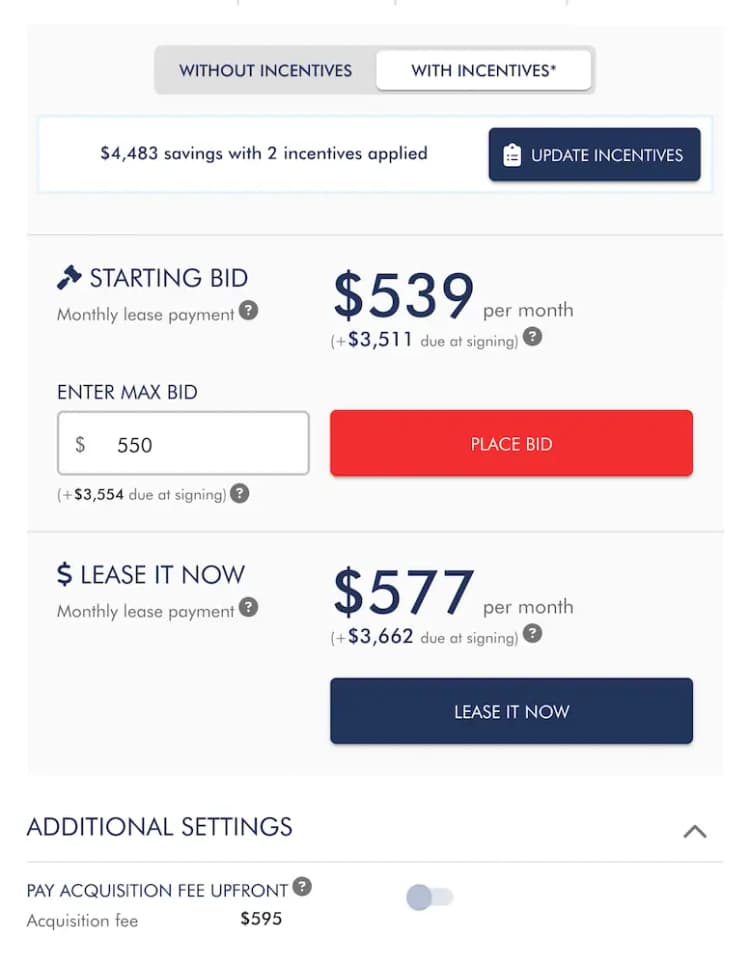
Auto Bandit takes the stress out of finding the best car deals by offering clear, competitive leasing and financing options. Whether you’re looking for a new or used vehicle, our platform connects you with the top offers in Indiana, ensuring a simple and straightforward process every step of the way. Start exploring today to see how Auto Bandit can help you drive off in your next vehicle.
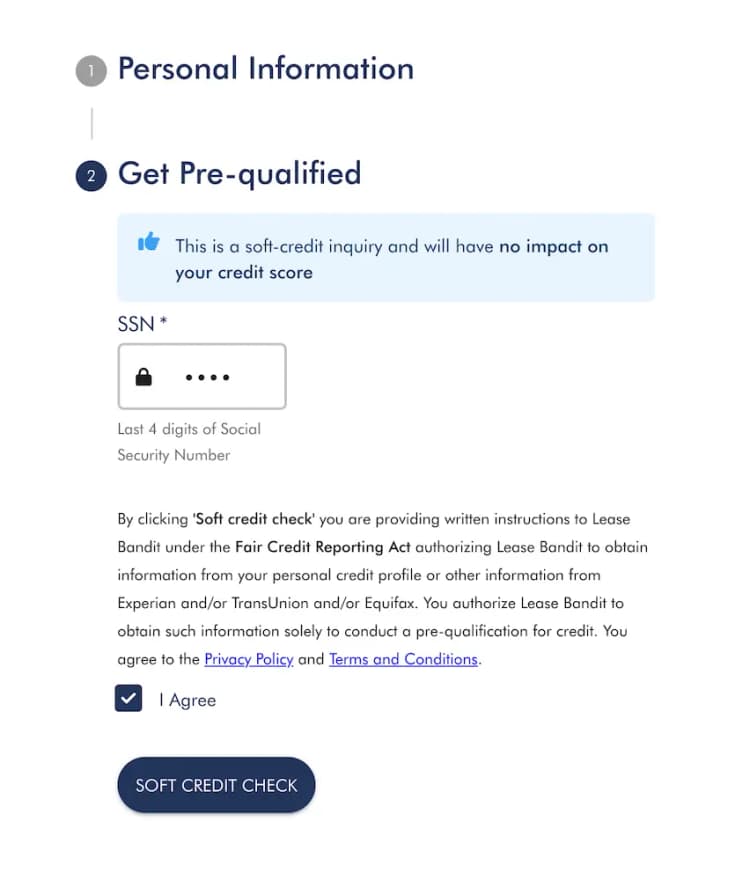
Create an account and fill in your information
Sign up with your email and zipcode. We need your credit tier to provide accurate prices
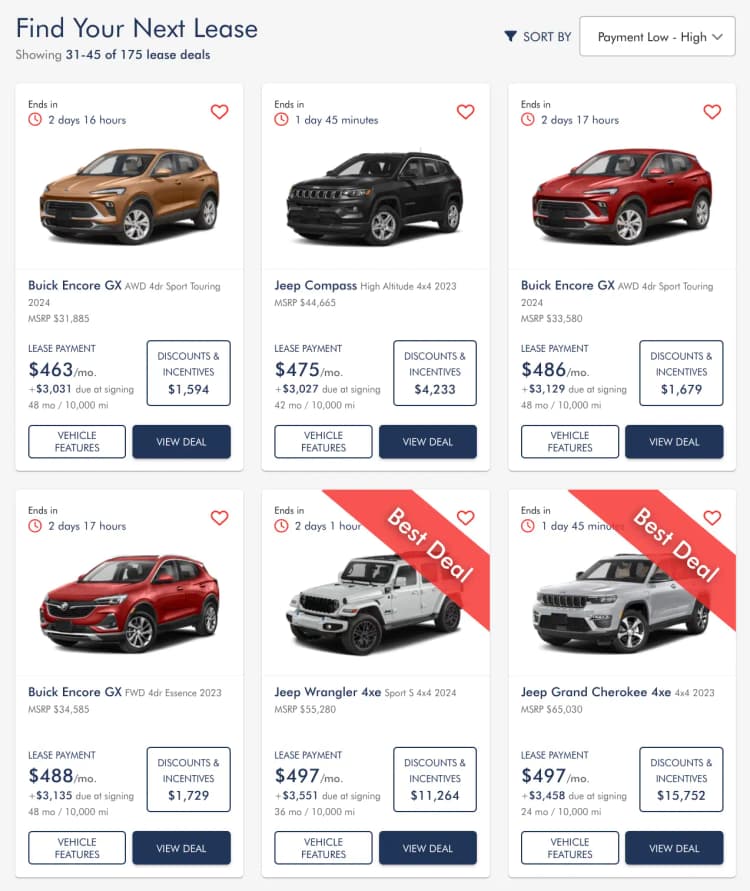
Find your vehicle
Search for vehicles by the year, make, model or even option packages you want
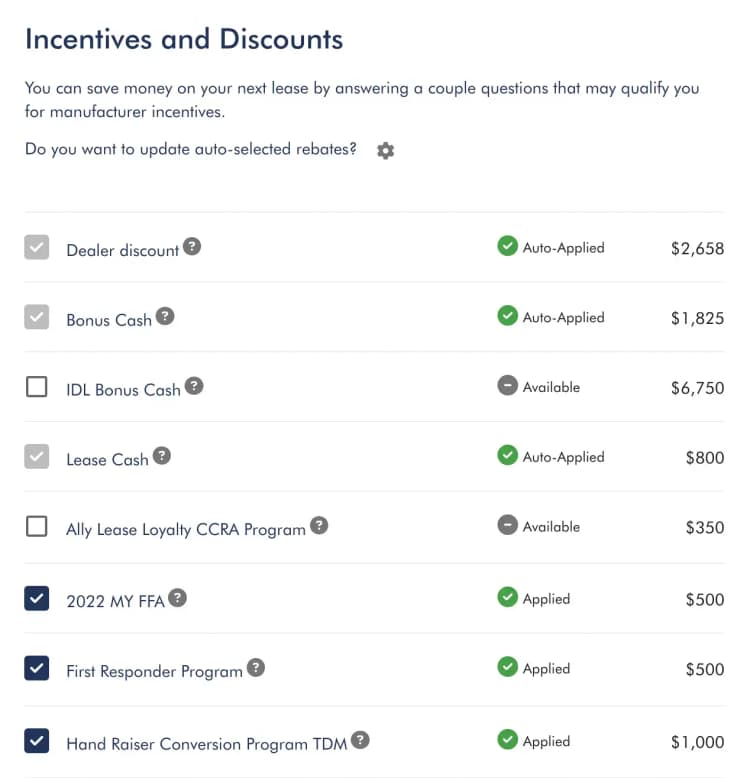
Apply incentives and rebates
Answer some simple questions to take advantage of incentives and rebates
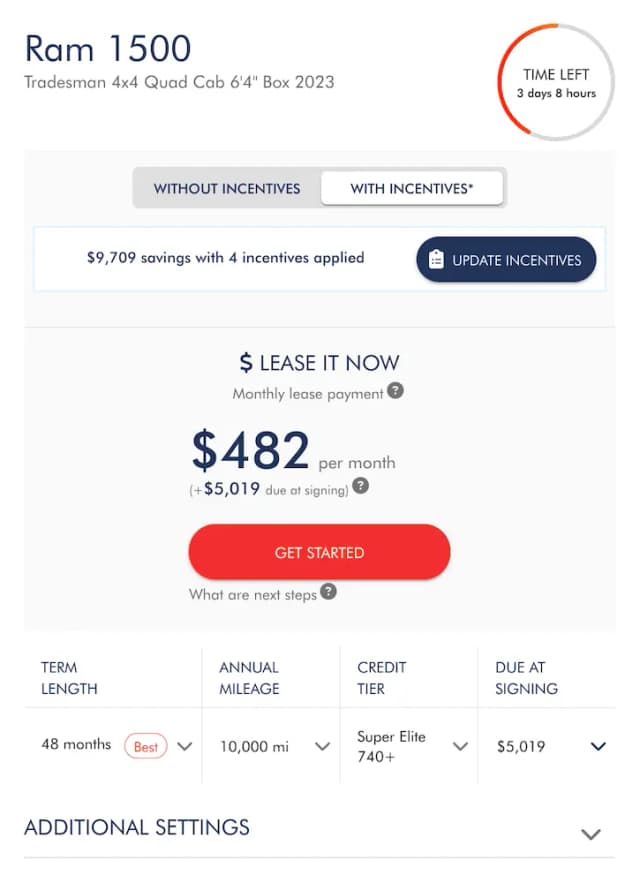
Set your leasing terms and get a great deal
Whether you choose to lease or finance, adjust your term length, mileage, down payment, and other conditions to find the perfect plan. Enjoy flexible options tailored to your needs and drive away with confidence.
Explore Leasing and Financing Options
Discover your perfect vehicle through flexible leasing and financing options, with great deals tailored to your needs.
Zero Down Lease Options in Major Indiana Cities
Lease or Finance a Car Near You

